The 1.2% Problem: Why Most Australian and New Zealand Trade and Health Businesses Are Invisible to ChatGPT
A 2026 study found ChatGPT recommends just 1.2% of local businesses. If you run a trade or health business in Australia or New Zealand, here's what that means for you.
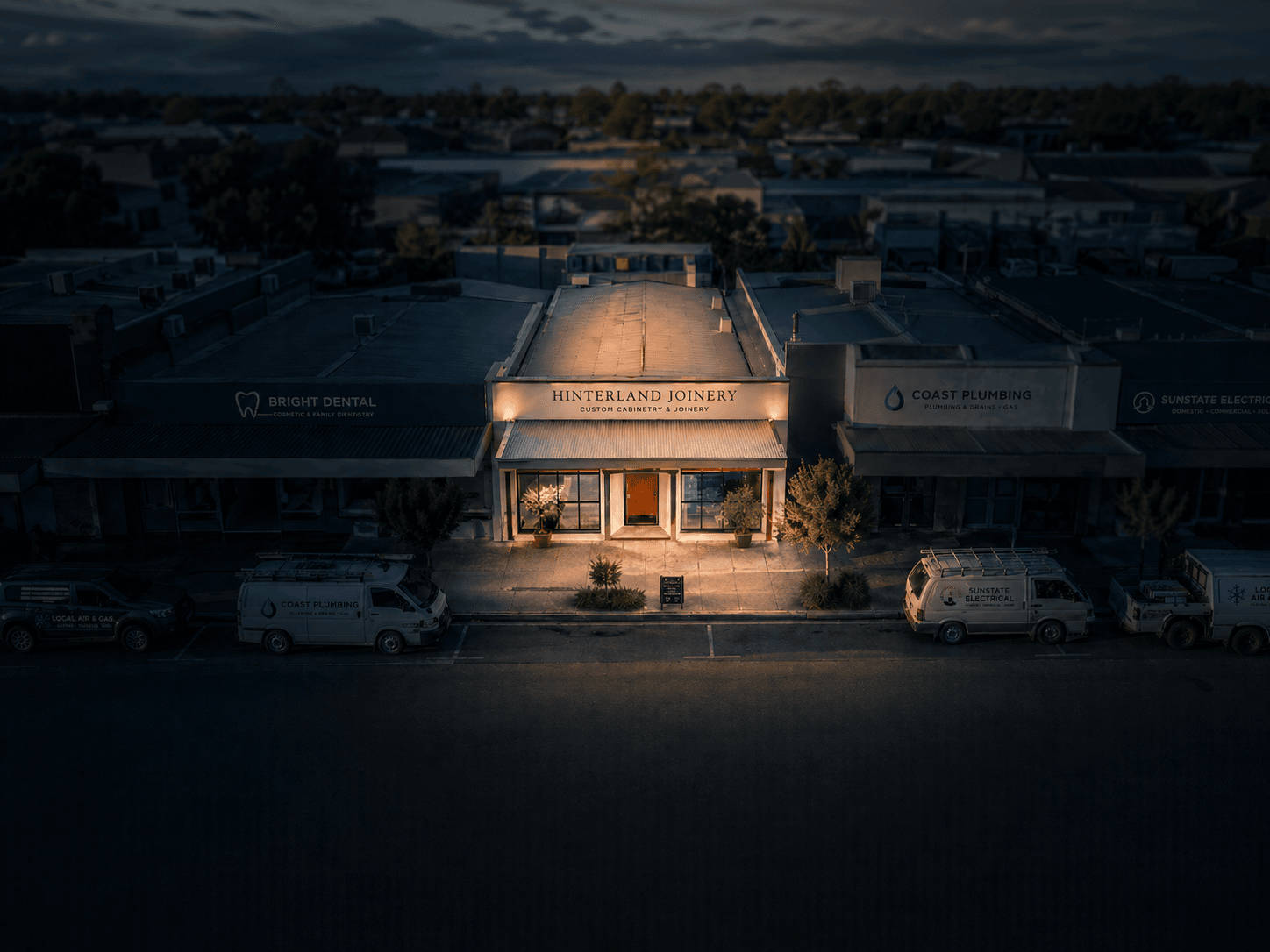
If someone in your city asked ChatGPT to recommend a tradie, dentist, or allied health provider like you right now, there's a 98.8% chance your name wouldn't come up.
That's not a guess. That's the finding from a 2026 study analysing over 350,000 business locations across 2,751 brands. The result: ChatGPT currently recommends just 1.2% of all local businesses.
One in a hundred. Maybe two.
Everyone else is invisible.
What is the 1.2% Problem?
The 1.2% problem is the growing gap between businesses that appear in AI-generated recommendations and the vast majority that don't, even when those businesses rank well on Google.
The same research found that only 45% of businesses performing well in traditional local search also appear in AI recommendations. More than half of businesses with strong Google rankings are completely invisible to ChatGPT.
Being on page one of Google no longer means you're visible where a growing number of customers are actually looking.
Why This Is Especially Urgent for Australian and New Zealand Service Businesses
Australia is one of the most AI-engaged countries in the world. Nearly half of all Australians (49%) have used generative AI tools in the past year, and of those, 74% report using them for work-related tasks. New Zealand is tracking close behind, with AI tool adoption rising sharply across both countries throughout 2025.
We're not talking about a niche tech audience. We're talking about your customers.
Google AI Overviews rolled out across Australia in October 2024, earlier than many comparable markets, and local adoption has been tracking above the global average since. The New Zealand rollout followed closely, and the behaviour shift is the same: people are asking AI tools for recommendations before they search, and often instead of searching.
Here's the part that should give every service business owner pause: a HubSpot survey of over 1,000 Australian business leaders, conducted by independent research firm Lonergan Research in February 2026, found that only one in five are actively doing anything about AI visibility. And that's among larger, more resourced businesses. For small and medium service businesses, awareness is likely far lower.
That's not a reason to feel behind. That's your window.
Think about what this means in practice. A homeowner in Auckland types "best electrician near me" into ChatGPT. A patient in Brisbane asks Google's AI Mode to recommend a physio. A small business owner on the Sunshine Coast asks Perplexity which accountant locals trust. In each case, AI doesn't return a list of ten options. It names one or two businesses and moves on.
If your business isn't one of them, the customer never sees your name, never visits your site, never knows you were an option.
That's not a traffic problem. That's a revenue problem.
Try This Right Now
Open ChatGPT and type:
"Who are the best [your trade or service] in [your suburb or city]?"
Try it with your actual business type and location. For example:
- "Who are the best dentists in Maroochydore?"
- "Can you recommend a plumber on the Sunshine Coast?"
- "What's the best physio clinic in Brisbane's north?"
- "Who are the most trusted electricians in Auckland?"
- "Best Allied Health clinic in Christchurch?"
Notice what comes back. Is your business mentioned? If not, you're in the 98.8%.
Now look at the businesses that are recommended. Notice what they have in common:
- Clear, structured websites that describe their services in plain language
- Consistent business information across Google, their website, and directory listings
- Strong, specific reviews that mention services by name
- Schema markup that helps AI understand exactly what they do and where they do it
That's not an accident. That's exactly what AI systems are built to look for.
How AI Decides Who to Recommend
Google's search algorithm ranks pages. It can show ten results, twenty, a hundred. Showing more costs nothing.
AI works differently. When ChatGPT recommends a business, it's putting its credibility behind that recommendation. A bad referral erodes user trust. So AI systems set a high confidence threshold before naming anyone.
The 2026 Local Visibility Index identifies three factors that consistently determine AI local visibility:
- Data accuracy and consistency. Business information was only 68% accurate on ChatGPT and Perplexity, compared to 100% on Gemini (which grounds itself in Google Maps). Businesses with inconsistent names, addresses, or phone numbers across platforms are frequently excluded.
- Review quality and volume. Businesses recommended by ChatGPT averaged 4.3 stars, higher than those surfaced by other AI tools. In AI-driven results, average ratings don't make the cut. AI prioritises confidence, not breadth.
- Structured, authoritative website content. An AirOps analysis of 548,534 retrieved pages found that only 15% of the pages ChatGPT retrieved actually earned a citation in a response. Being crawled isn't enough. AI is reading for structure: clear headings, short sentences, schema markup, and specific service information.
The Google Rankings Trap
Here's the part most business owners don't expect: your Google ranking is not protecting you.
Consider a dental clinic in Brisbane with a well-maintained website, strong local SEO, and a solid position in Google's local results. By traditional measures, they're doing everything right. But if their site lacks proper schema markup, their Google Business Profile doesn't match their website details exactly, and their reviews say "great service" rather than mentioning specific treatments by name, ChatGPT has no confident basis to recommend them. It skips them entirely and names the clinic down the road whose digital footprint happens to be better structured.
That's not a hypothetical. The research found that in the retail sector, only 45% of brands leading in traditional local search also appeared in AI recommendations. The same pattern shows up across service industries.
Two completely separate systems are now deciding your visibility.
In traditional Google search, you compete for a spot among ten or more results. Miss the top few and you're still on the page. The signals that matter are keywords, backlinks, and proximity. It's competitive, but visible.
In AI tools like ChatGPT and Perplexity, there are one to three results. Full stop. The signals that matter are structure, accuracy, reviews, and E-E-A-T. Miss the cut, and you don't appear lower down the page; you disappear entirely. AI local visibility is estimated to be up to 30 times harder to achieve than traditional local search.
Most businesses are only optimising for one of these systems.
What "AI-Visible" Businesses Do Differently
The businesses appearing in AI recommendations share a clear set of characteristics. They're not necessarily the biggest businesses or the ones spending the most on ads. They're the ones whose digital footprint is structured to answer the questions AI is asking.
They have service-specific pages. Not one page that mentions everything vaguely. Separate pages for each service, answering the questions a customer would actually ask AI. "Hot water system repair" as its own page. "Emergency dental appointment" as its own page. "Remedial massage Noosa" as its own page. Each one is a direct answer to a question a real customer is typing into ChatGPT right now.
They use schema markup. LocalBusiness, Service, and FAQPage schema give AI tools a machine-readable summary of what the business does, where it operates, and what customers say about it. Without this, AI has to guess, and it often guesses wrong, or skips the business entirely.
Their business information is consistent everywhere. Same business name, address, and phone number on their website, Google Business Profile, and every directory listing. Inconsistencies create doubt in AI systems, which respond by excluding that business from recommendations.
Their reviews are specific. Not just "great service, five stars." Reviews that mention specific services by name, "fixed our hot water system same day" or "the best sports physio I've seen in Christchurch," give AI the detailed, verifiable signals it needs to make confident recommendations.
Their websites load fast. An SE Ranking study of 129,000 domains found that pages loading under 0.4 seconds averaged 6.7 AI citations, while slower pages averaged just 2.1. Site speed isn't just a user experience issue anymore. It directly affects whether AI tools use your content.
Frequently Asked Questions
What is AI visibility for local businesses? AI visibility refers to how often your business is recommended by AI tools like ChatGPT, Perplexity, and Google's AI Mode when users ask questions about your industry or location. It's separate from, and increasingly more important than, traditional Google rankings.
Why is ChatGPT not recommending my business? The most common reasons are inconsistent business information across platforms, weak or generic reviews, no schema markup on your website, and service pages that aren't structured in a way AI can clearly interpret. Fixing these issues is what moves businesses from the 98.8% to the 1.2%.
Does ranking on Google help with ChatGPT visibility? Partially. Pages ranking in Google's top positions are more likely to be cited by ChatGPT than lower-ranked pages, but it's not a reliable predictor. Research shows that more than half of businesses ranking well in Google are completely invisible in AI recommendations. The signals that matter to AI are different from traditional SEO signals.
What is AEO (Answer Engine Optimisation)? AEO is the practice of structuring your website and digital presence to be recommended by AI tools, not just ranked by search engines. It involves schema markup, clear service descriptions, consistent business data, and content that directly answers the questions your customers are asking AI tools.
How do I check my AI visibility? Open ChatGPT, Perplexity, and Google AI Mode. Ask each one to recommend your service in your city. Score each response: 2 points if your business is named in the answer, 1 point if you appear only in source links, 0 if you don't appear at all. That gives you a baseline.
How long does it take to improve AI visibility? It varies, but businesses that address the core issues, schema markup, citation consistency, review quality, and site speed, typically see measurable improvement within 60 to 90 days. AI tools re-index and update their knowledge regularly, though not on a predictable schedule.
The Opportunity in the 98.8%
Here's the part most people miss: because so few businesses are optimised for AI visibility, the opportunity is wide open right now.
The 1.2% isn't made up of the biggest companies or the ones with the largest ad budgets. It's made up of businesses that got the technical foundations right, structured content, accurate data, strong reviews, before everyone else figured out the game had changed.
Even among larger Australian businesses, the HubSpot research found only one in five are doing anything about AI visibility. For small service businesses in Australia and New Zealand, that number is almost certainly lower. Your competitors are almost certainly in the 98.8%.
That gap is closing. Every month that passes, more businesses discover this problem and start fixing it. The window to be early is narrower than it was six months ago.
What We Do About It
At AT Digital Co, we're a Sunshine Coast-based husband and wife team working with trade, health, and service businesses across Australia and New Zealand.
We specialise in two things: rebuilding websites that are slow, dated, or invisible to search, and optimising existing sites to get found in Google, Google Maps, and the AI tools that customers are now using to find local services.
Every project starts with a baseline audit of where you currently stand, across traditional search and AI visibility. We do the technical work, schema markup, citation consistency, site speed, E-E-A-T signals, and finish with a plain-English before-and-after report showing exactly what changed and what it means for your business. Something you can actually show your accountant or business partner.
No lock-in contracts. No account managers. You deal with us directly.
If you want to know where you stand right now, get in touch for a free audit. We'll show you what ChatGPT currently knows about your business, where the gaps are, and what it would take to fix them.
Sources: 2026 Local Visibility Index (350,000+ business locations); SE Ranking ChatGPT Citation Study (129,000 domains, November 2025); AirOps ChatGPT Citation Report (548,534 pages); Search Engine Land; HubSpot/Lonergan Research AEO Survey (1,007 Australian business leaders, February 2026); Google/Ipsos "Our Life with AI" Survey (Australian AI adoption data, January 2025).
See how your website is performing — for free.
Enter your URL and get a full audit in minutes — Google rankings, AI search visibility, mobile speed. No obligation.
Get my free website audit →